
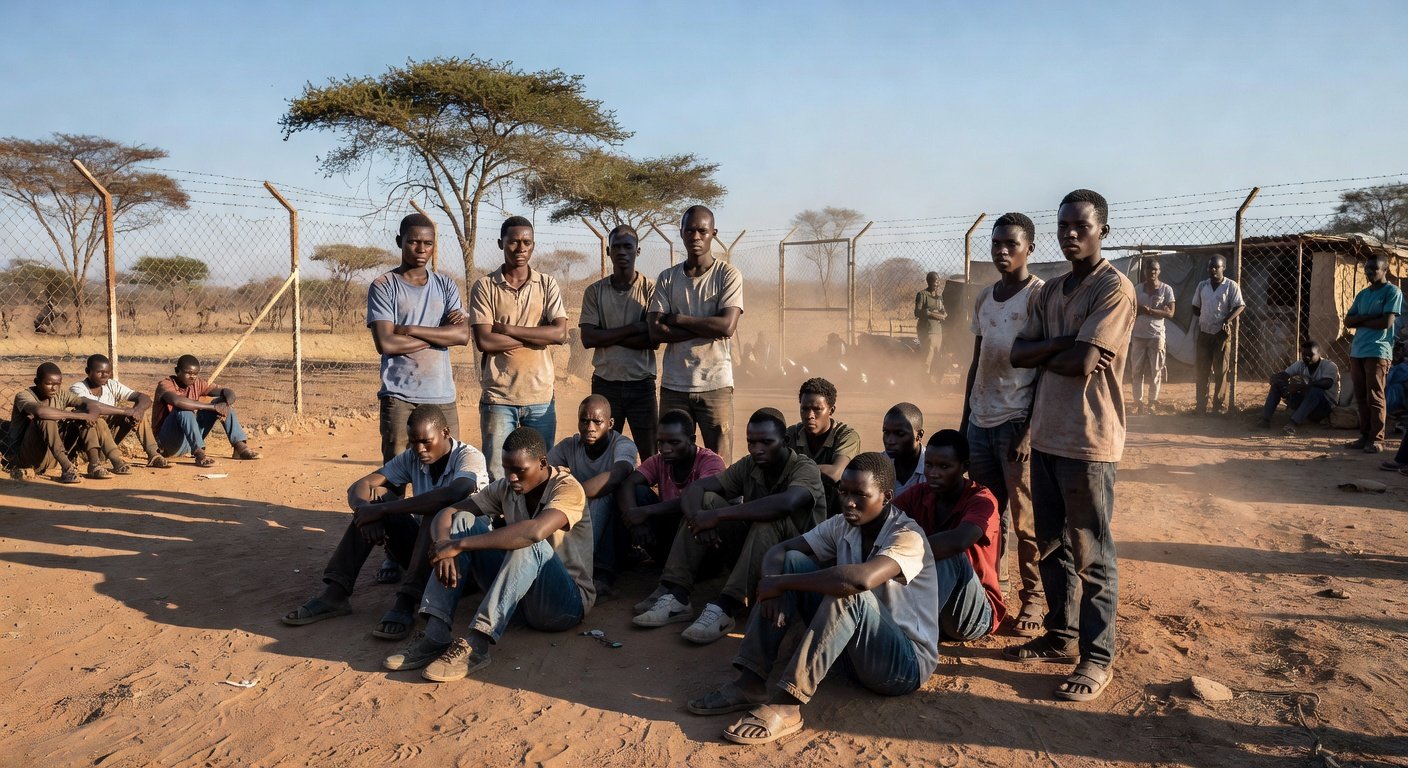
Forced Relocation, Forced Choices
Fifteen Latin American nationals, deported from the U.S. to Congo under a Trump-era policy, now endure what Congo’s president calls a “dream” but feels more like a nightmare. One 29-year-old Colombian woman, granted U.S. judicial protection from returning to her home country, found herself shackled on a nearly 24-hour flight. She landed in a nation she’d never heard of, facing an impossible dilemma: return to certain persecution or remain stranded in an unknown land, bereft of support, as her three-month Congolese visa nears expiration. This isn’t just an administrative relocation; it’s a deliberate placement into an untenable situation.
Confined to a Kinshasa hotel, the deportees describe being treated “like children.” The International Organization for Migration (IOM) supervises their rare weekly outings, dictating destinations and purchases. Activities meant to stave off boredom have largely failed. The Colombian woman, spending nights calling her 10-year-old daughter, worries about their reunion. Her U.S.-based attorney, Alma David, maintains that by deporting individuals to a third country without the chance to contest it, the U.S. has flouted due process rights, immigration laws, and international treaty obligations. This isn’t oversight; it’s systemic disregard for established legal protections.
Shady Deals, Dubious Justifications
The IOM offers deportees a stark ultimatum: accept “protection and assistance” to return to their dangerous home countries—a move U.S. judges specifically prohibited—or stay in Congo unsupported. This isn’t a choice; it’s a trap. Congo is one of at least eight African nations that have struck deals with the U.S. to accept these third-country nationals. Many of these individuals had received U.S. judicial orders shielding them from persecution. Legal experts widely view these agreements as loopholes, designed to circumvent U.S. asylum laws and international obligations. The mechanisms for human protection are being actively undermined.
The U.S. Department of Homeland Security defends these arrangements, asserting they “ensure due process” and are necessary to “remove criminal illegal aliens” whose home countries refuse repatriation. The financial details of Congo’s deal remain opaque, though other participating nations reportedly received millions. Congolese President Félix Tshisekedi calls it an “act of goodwill,” denying financial compensation. This “gesture” comes amid U.S. pressure on Rwanda over rebel activity in eastern Congo, suggesting a convenient political exchange. Tshisekedi’s dry assessment: they’re “unsettled” because they got the “Congolese dream” instead of the American one.
A Policy of Indifference, An Uncertain Future
The Colombian woman’s ordeal began with a credible fear. Fleeing threats from armed groups and an abusive government-affiliated ex-partner, she sought asylum in the U.S. in September 2024. Despite a federal judge granting her protection under the U.N. Convention Against Torture in May 2025, she spent 1.5 years in ICE detention. There, she endured racist remarks, denied basic amenities, and witnessed frequent abuse. Released with a GPS monitor in February, her first ICE check-in resulted in immediate redetention. Her destination: an unknown “third country” – Congo, a detail revealed just a day before her forced departure.
On April 17, less than three weeks after her second detention, she was forcibly flown to Kinshasa, hands and feet restrained. Congolese human rights groups, including the Institute for Human Rights Research, label this “arbitrary detention by proxy for the United States.” The deportees, housed in locked bungalows with no freedom of movement, are reluctant to apply for asylum in a country where they feel unsafe, are plagued by stomach ailments from the food, and isolated by language barriers. The IOM’s vague “humanitarian assistance” offers little solace as their visas expire. Their future, much like their forced journey, remains brutally uncertain.
Quick Facts
- •💡 15 Latin American nationals were deported from the U.S. to Congo under the Trump administration’s policy.
- •💡 Many deportees had U.S. immigration judges’ protection orders against being returned to their home countries.
- •💡 Deportees are confined in a hotel near Kinshasa, Congo, with supervised outings controlled by the International Organization for Migration (IOM).
- •💡 IOM offers a choice between returning to their home countries (despite judicial protection) or remaining in Congo without support.
- •💡 The deportees’ three-month Congolese visas are nearing expiration, leaving their legal status and future uncertain.